IJPAM: Volume 11, No. 2 (2004)
PRINCIPLE AND ITS APPLICATIONS TO
NONLINEAR VARIATIONAL PROBLEMS
Department of Mathematics
University of Toledo
Toledo, Ohio 43606, USA
e-mail: Verma99@msn.com
Abstract.This paper deals with a crucial role of the partial relaxed monotonicity - a relatively new and less explored concept - in the approximation solvability of a class of nonlinear variational problems on Hilbert spaces, though the convergence analysis much depends on the general auxiliary minimization problem principle. The nonlinear variational inequality problem (NVIP) is stated as follows: find an element
 such that
 and
and

where
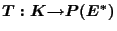 is a mapping from a nonempty
closed convex subset
is a mapping from a nonempty
closed convex subset  of a real reflexive Banach space
  into the power set
  of
of  , and
, and  is a continuous
convex functional on . Here
is a continuous
convex functional on . Here
 denotes the duality pairing
between elements
denotes the duality pairing
between elements
 and elements
  .
.
Received: October 11, 2003
AMS Subject Classification: 49J40, 65B05
Key Words and Phrases: auxiliary problem principle, approximation solvability, approximate solutions, partially relaxed monotone mappings, cocoercive mappings
Source: International Journal of Pure and Applied Mathematics
ISSN: 1311-8080
Year: 2004
Volume: 11
Issue: 2

